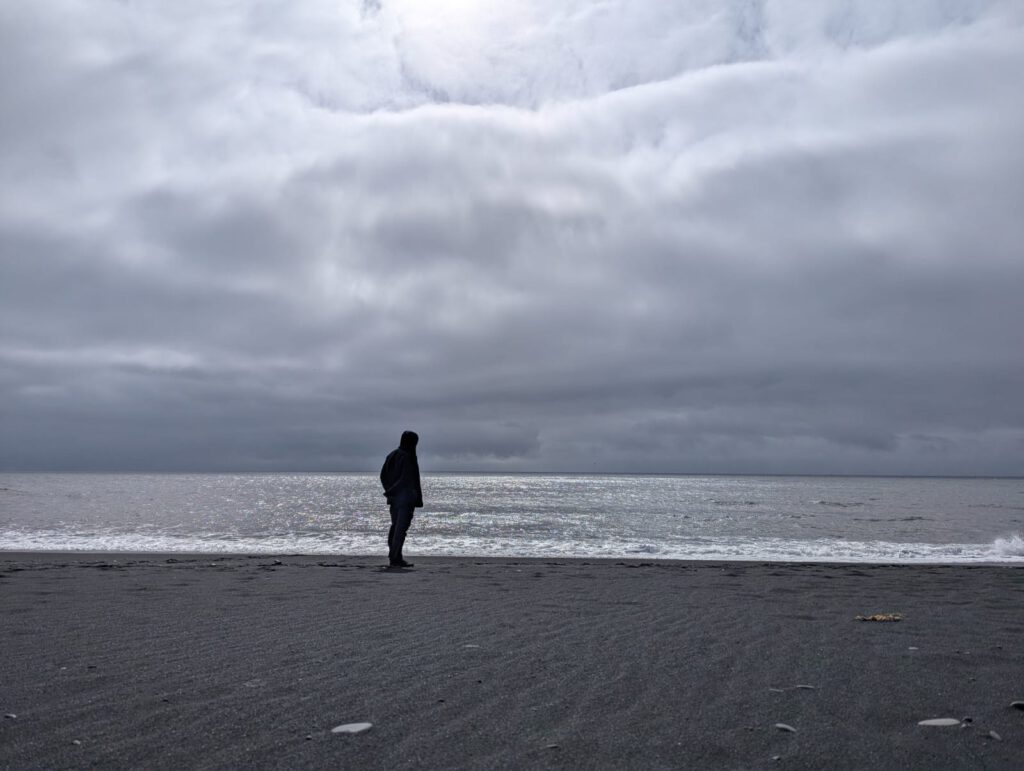
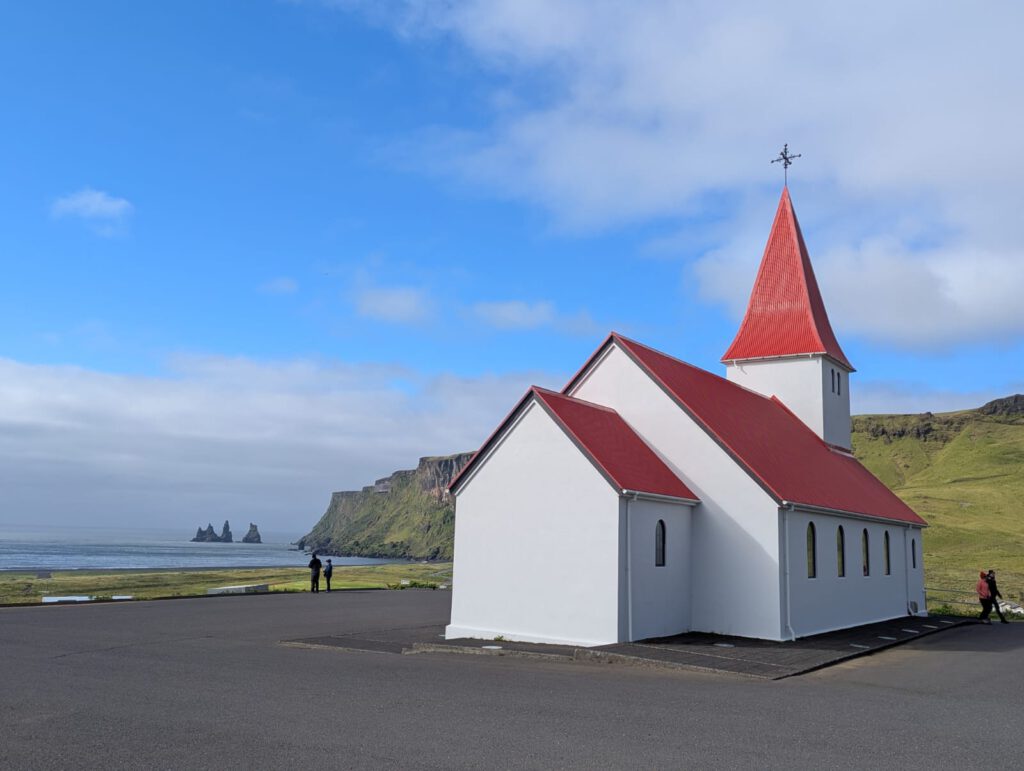
The cries of seagulls wake us this morning. The campsite is nestled comfortably among rocks on a small meadow, and while we eat breakfast, we hear the murmur of the other campers. We drive to Reynisfjara Beach, where a gigantic spectacle awaits us: The waves roll powerfully and relentlessly onto the shore, as if nature wants to remind us who is truly in charge here. Vík í Mýrdal is usually a tourist hotspot, but today a strange melancholy hangs in the air for us, because a few days ago a little girl lost her life in the waves. We see the memorial with its flowers and candles, and as we let our gaze wander across the sea, we realize how powerful and unpredictable nature can be. We feel that we must treat nature, ourselves, and those we love with respect if we want to live happily.
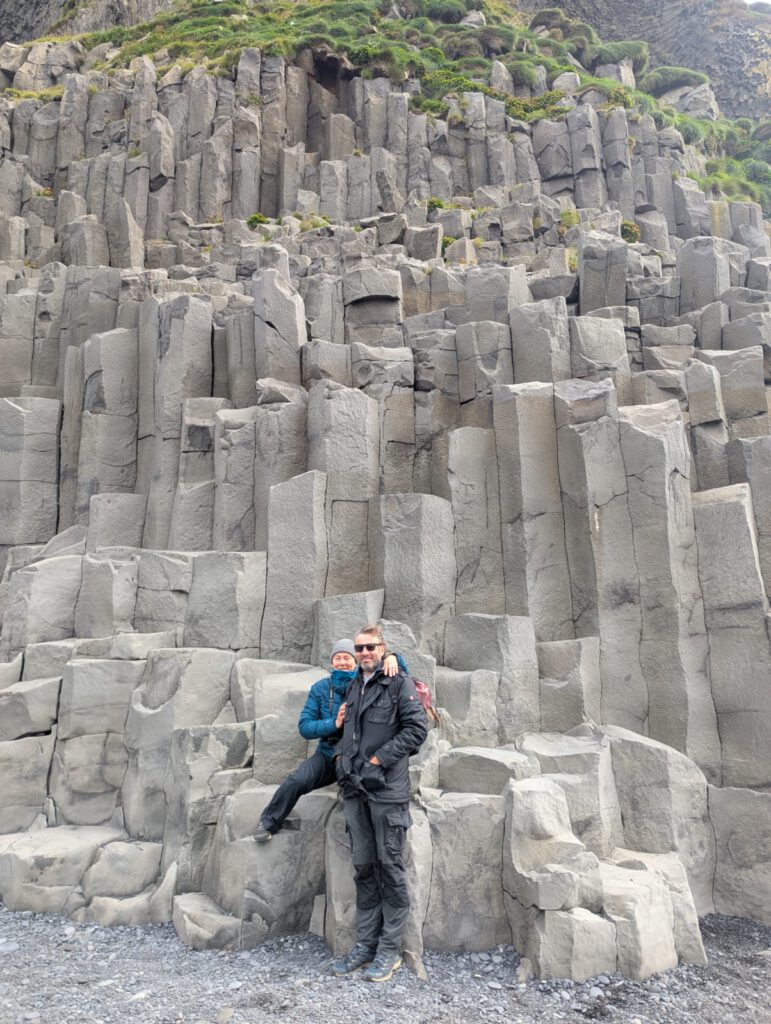
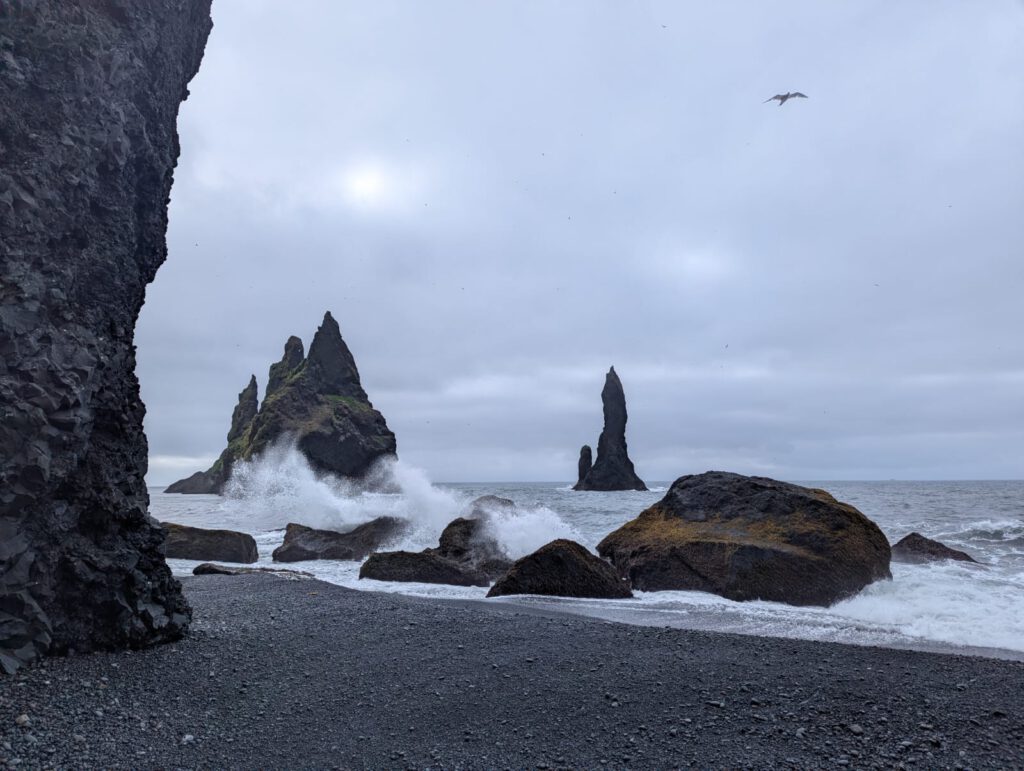
We set off towards the basalt columns. The sea still rages there, the waves crash against the dark rocks, the seagulls screech overhead, and among them we see for the first time puffins, the small birds that nest here. It’s a fascinating spectacle, an interplay of beauty, new beginnings, and transience. We drive back to the east beach, where it’s deserted. We sit there almost alone, letting our hands glide through the black sand and enjoying the sudden silence.
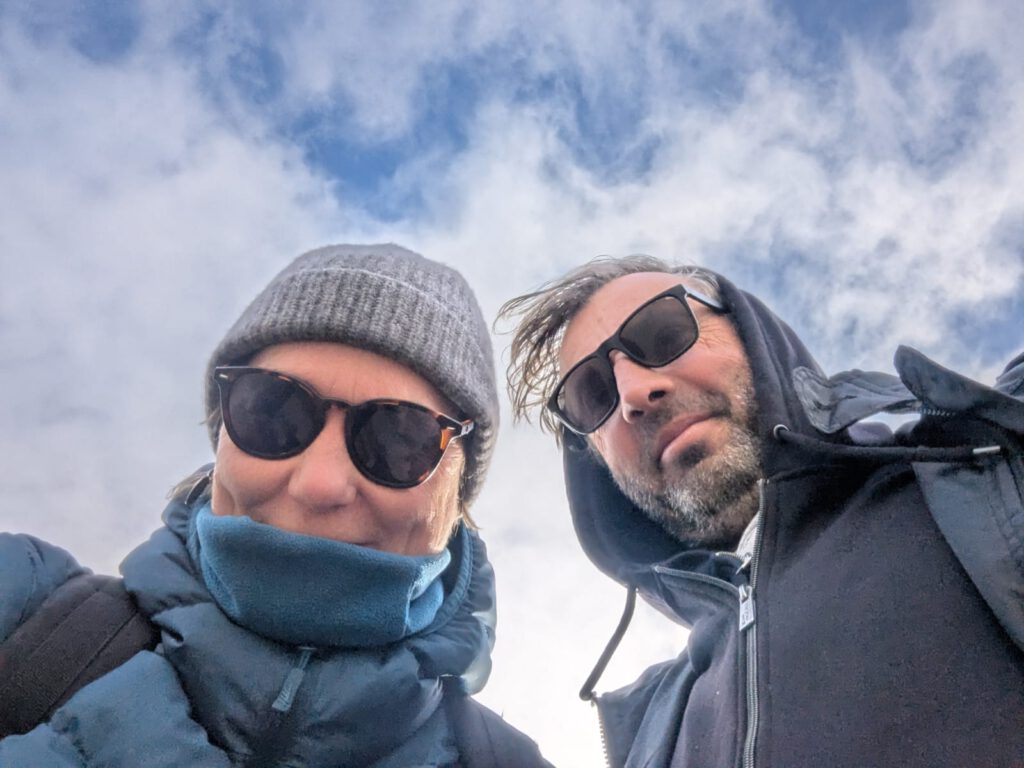
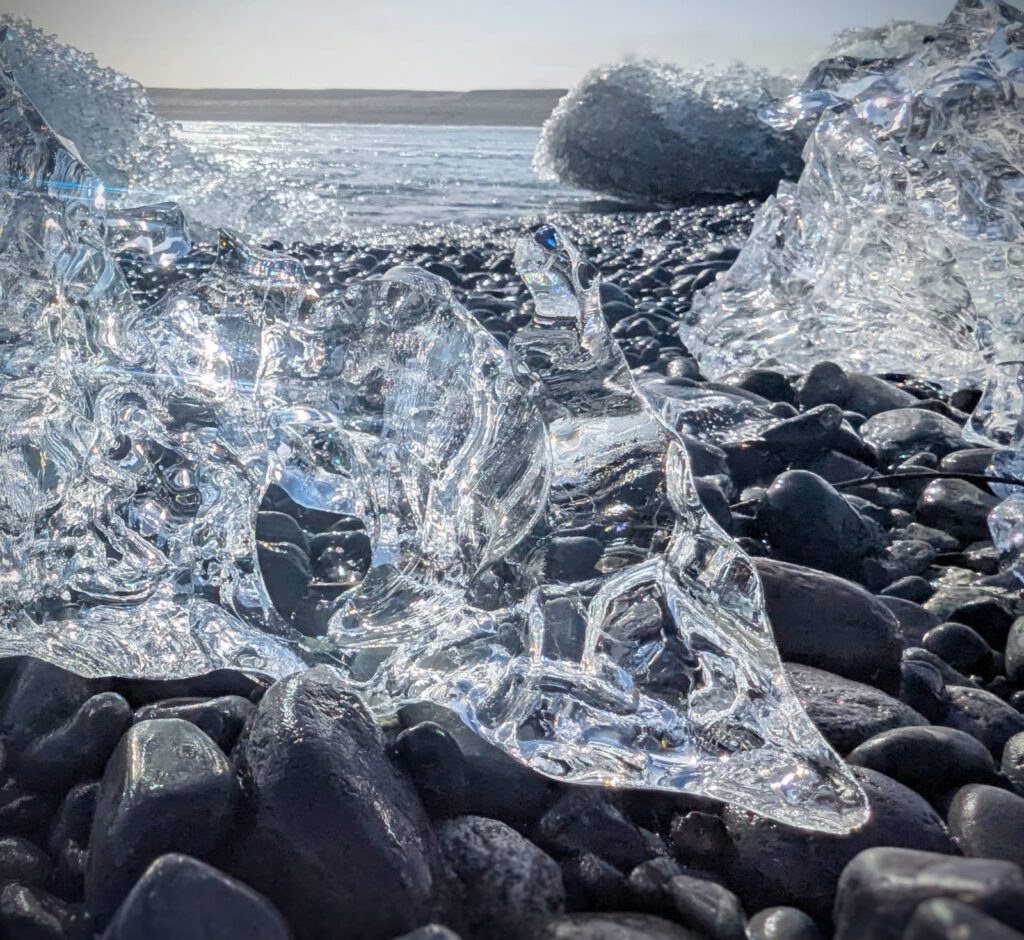
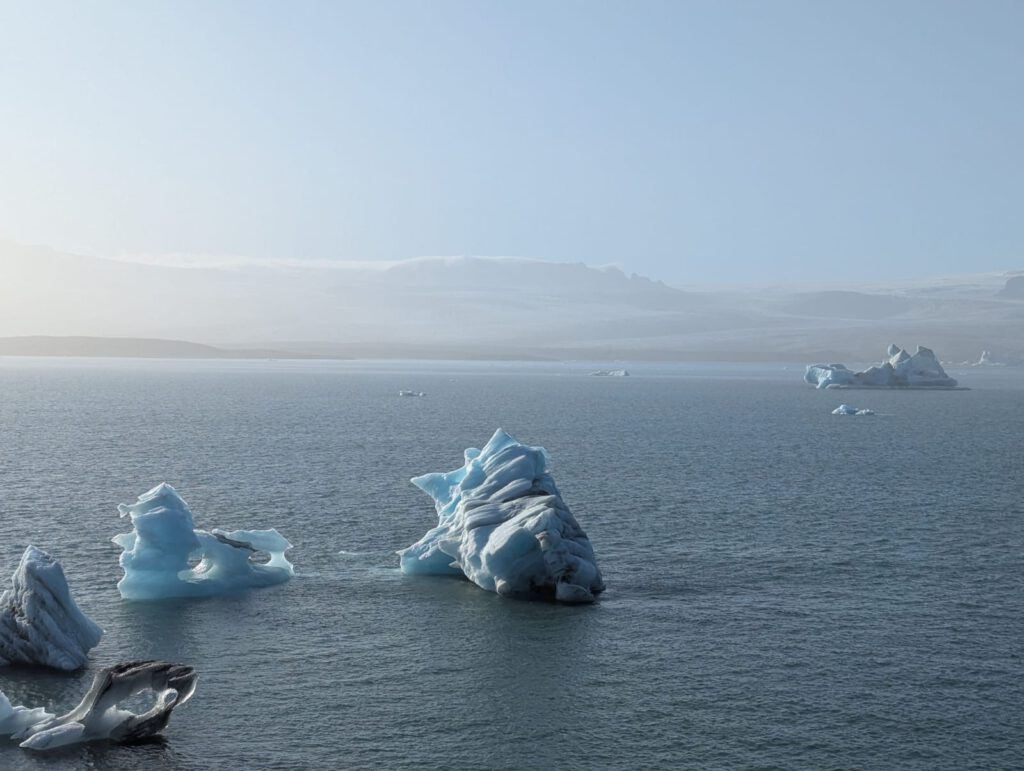
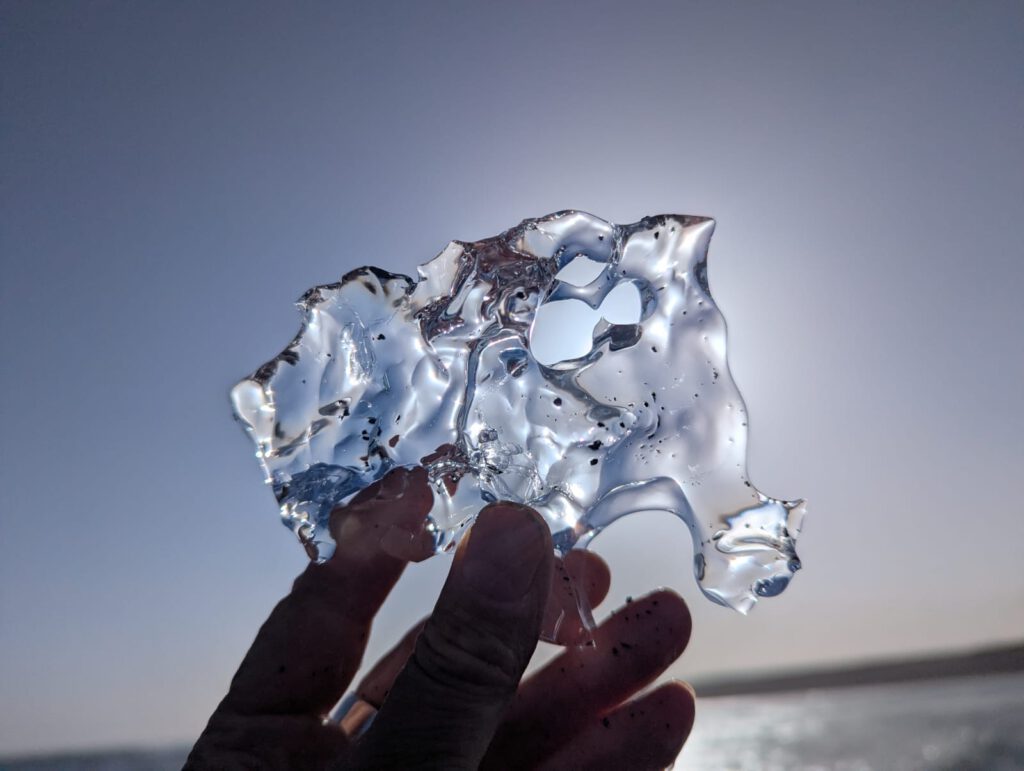
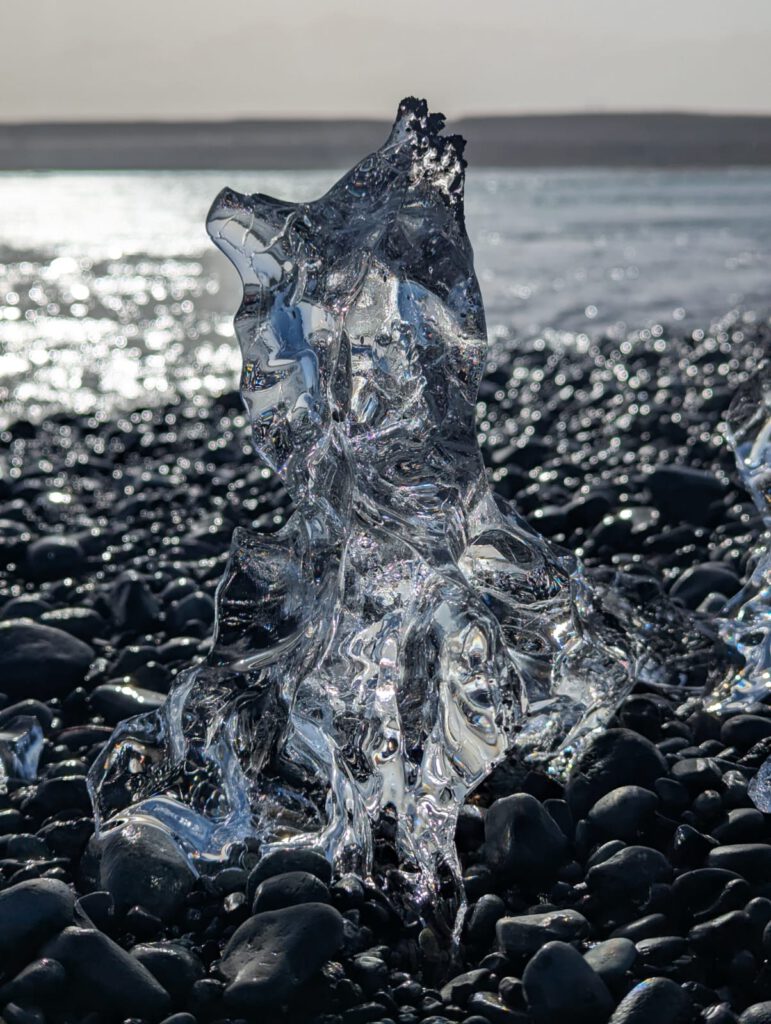
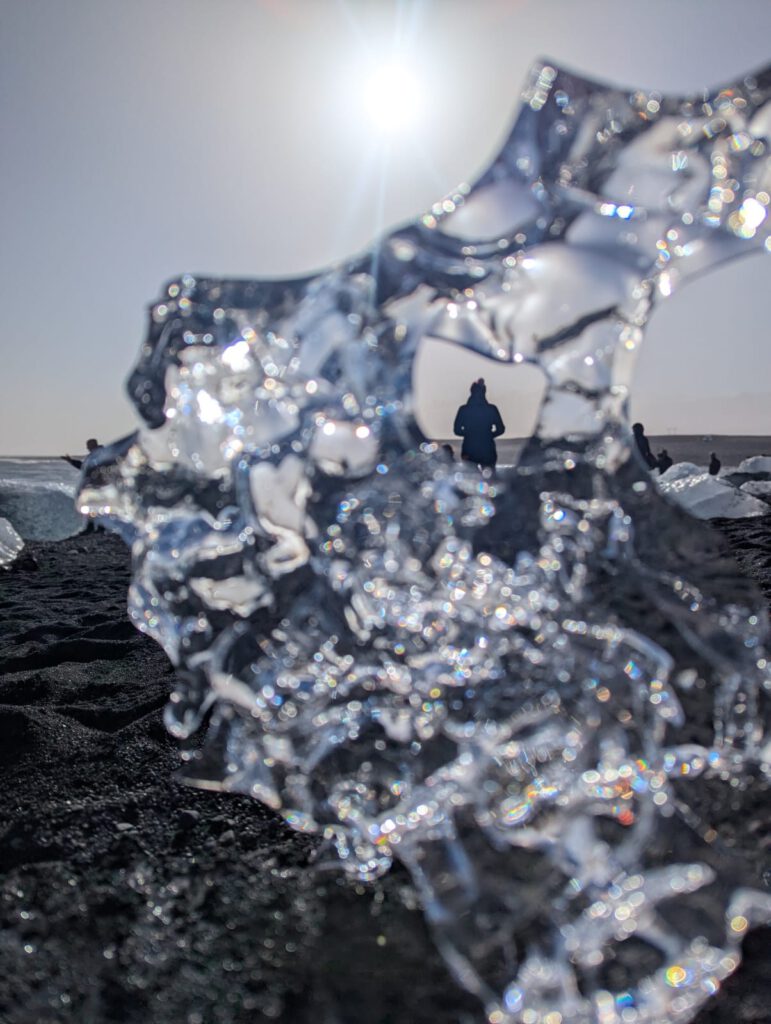
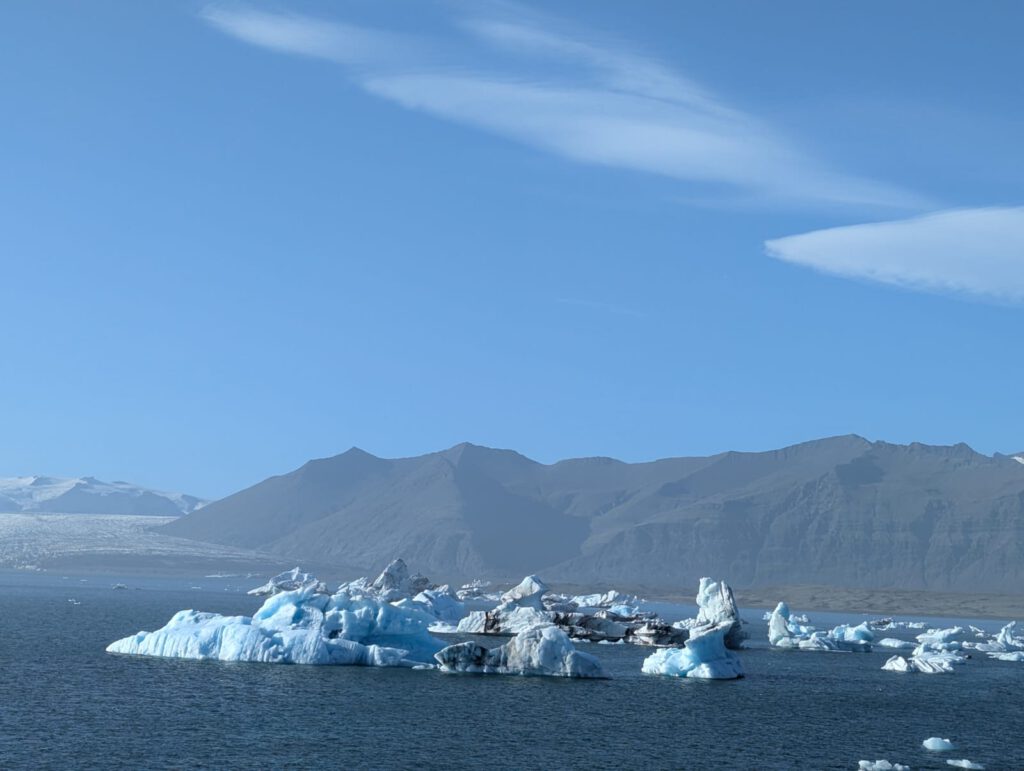
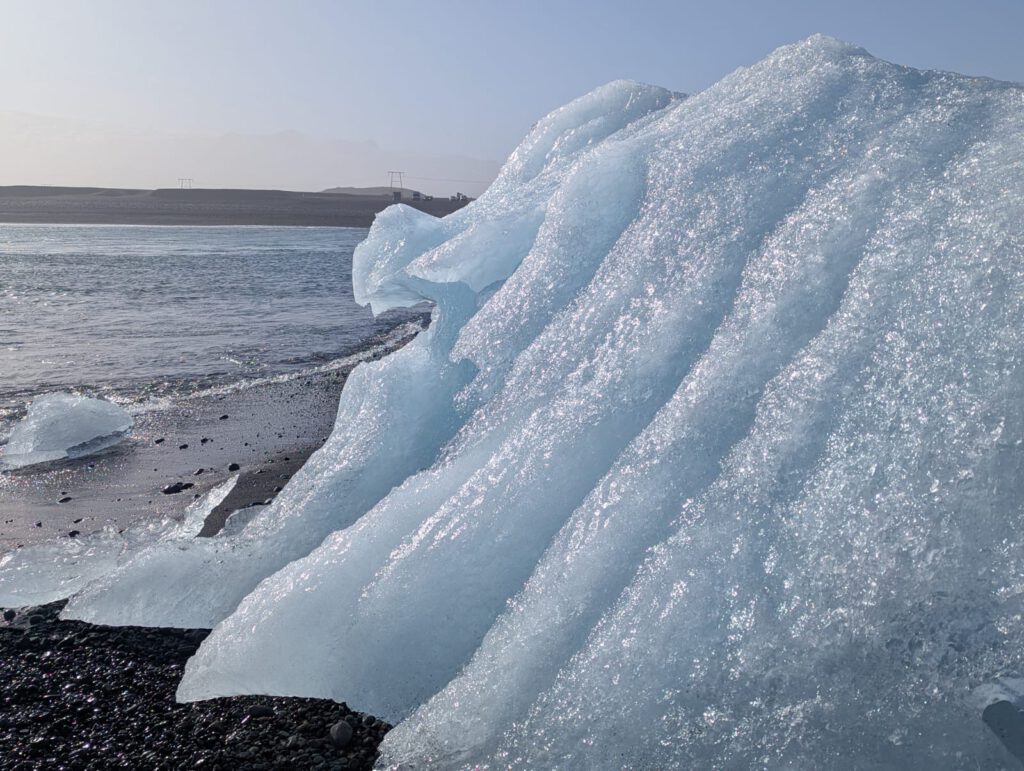
From Vík, we continue east. Cars are bumper to bumper on the ring road, and only a single cyclist braves the relentless wind. We drive past Eyjafjallajökull, the volcano that erupted in 2010, and finally reach the Jökulsárlón glacier lagoon. The sight is breathtaking: blue ice floating in the water and chunks of ice washed up on the black sand beach, glittering like diamonds in the sun. We see a large heart on the mountain opposite and feel nothing but love and gratitude. It’s a magical moment.
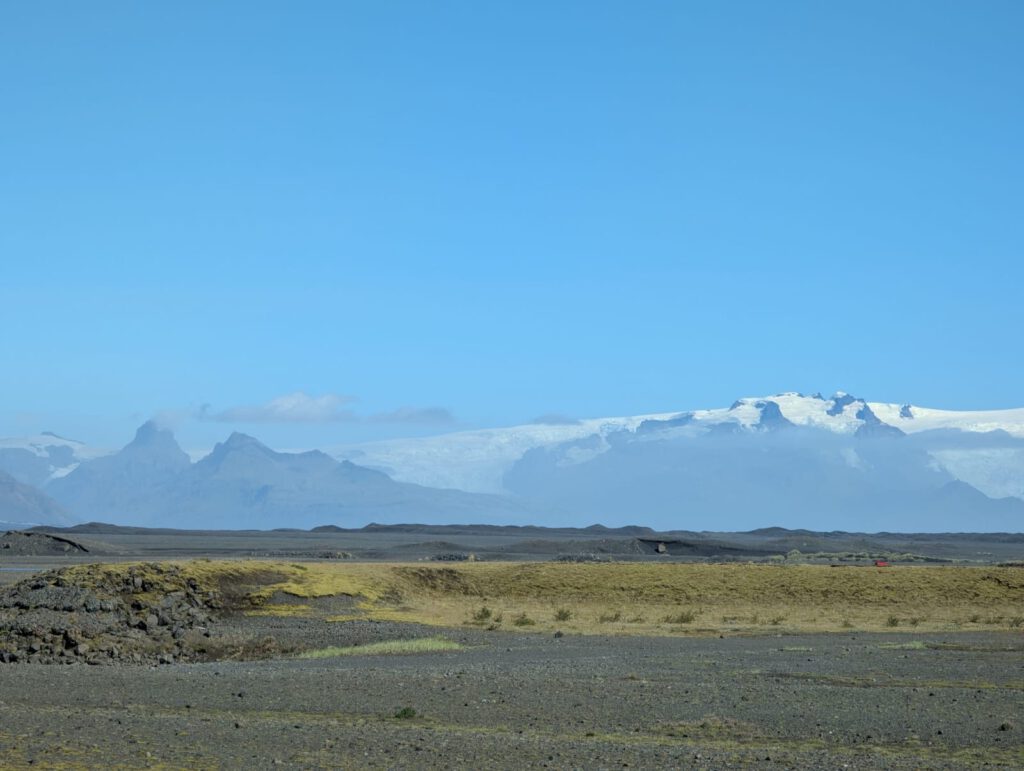
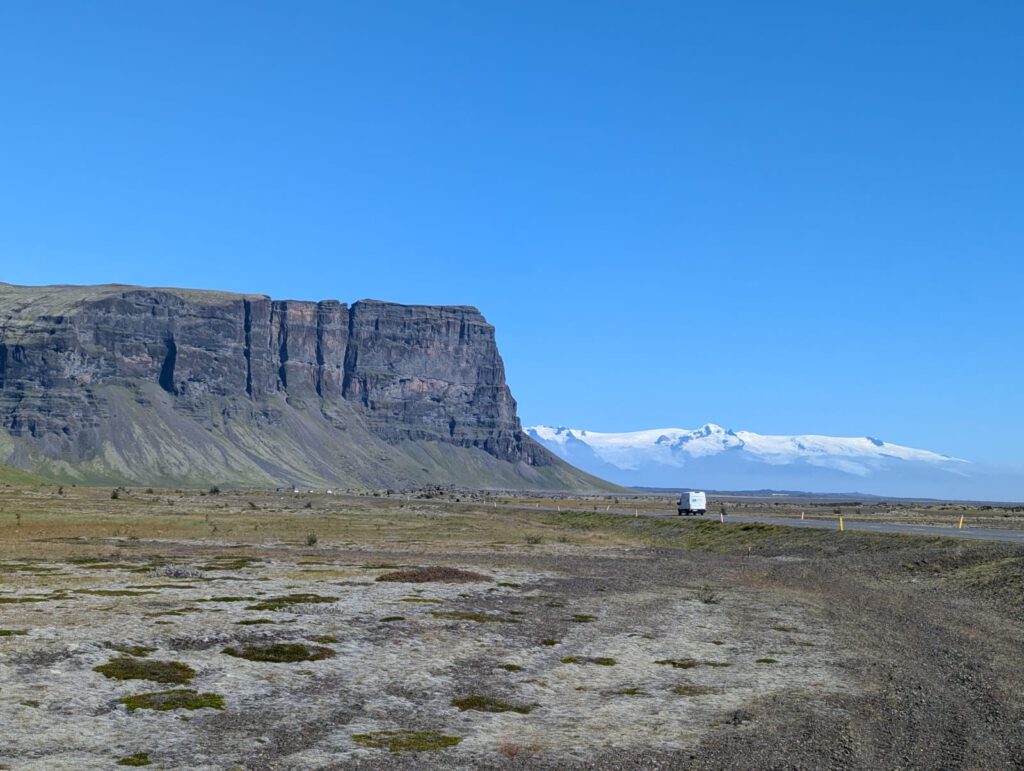
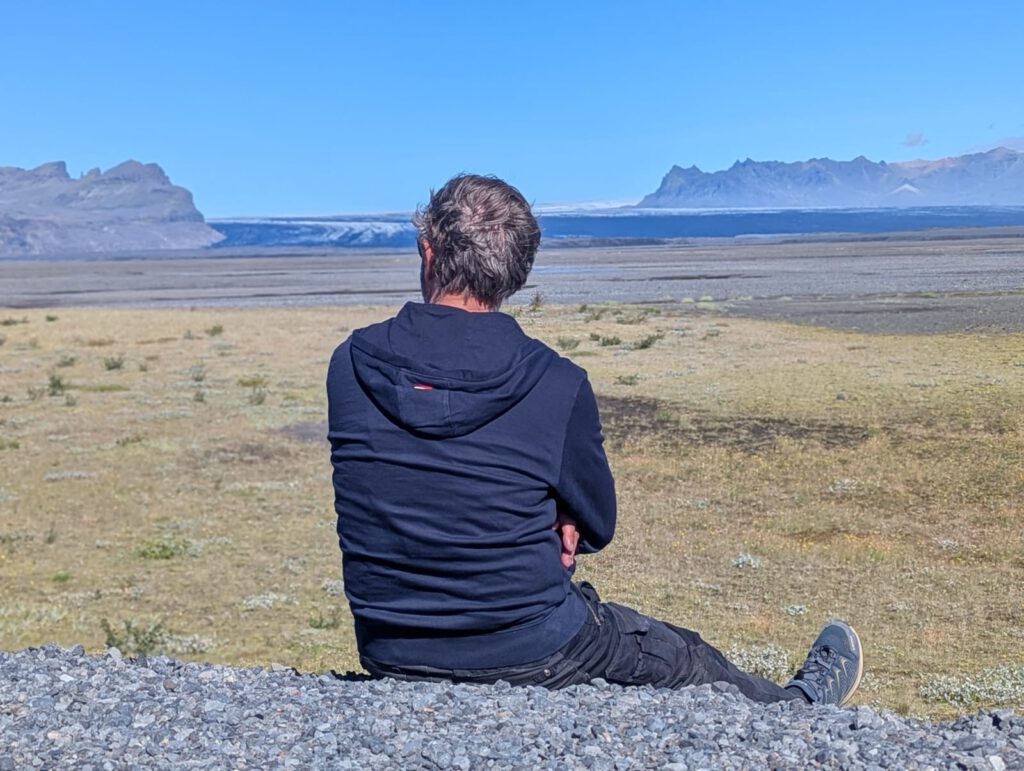
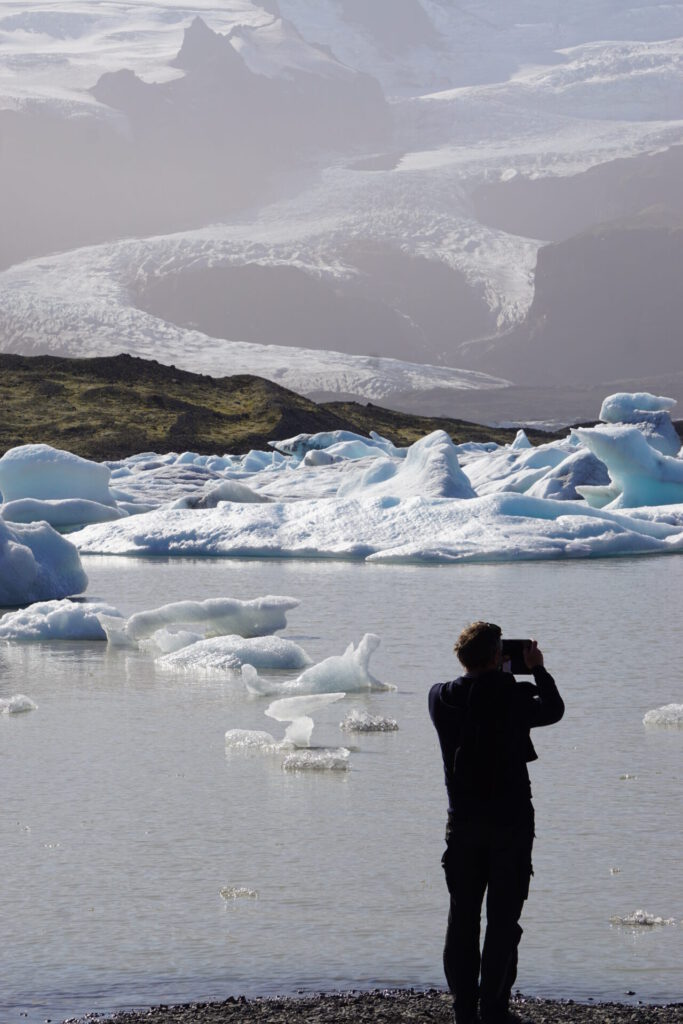
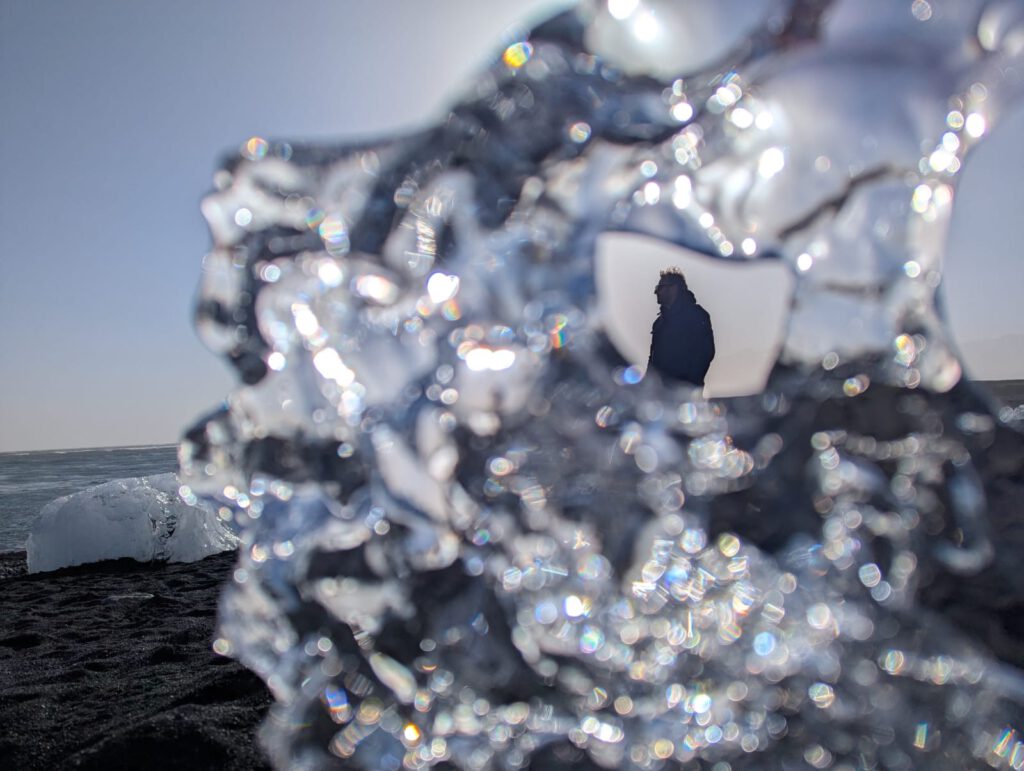
We continue on to Fjallsárlón and see large chunks of ice that wash up on the beach like diamonds and eventually drift out to sea. The longer we gaze at this scene, the harder it becomes to enjoy this beauty without a second thought. For it exists only because something else is breaking: the glacier itself. This time, this „breaking down“ doesn’t feel like Þingvellir, where something new emerges from the old. Here, it feels more like a loss. The glacier melts piece by piece, and we realize that what we find so beautiful is, in truth, the transience of a dying ice giant. While others marvel and take photos, we see in the ice diamonds the glacier’s sorrowful soul, washed ashore and slowly dying in the sun.
We continue driving along the coast, where the air becomes increasingly mild. The road winds through numerous fjords, past waterfalls and lush hills. Every now and then, we glance back at the glacier shimmering in the distance behind us. In Höfn, we find a small campsite with a view of a long mountain range. When we ask the campsite manager if it’s nice here, he shrugs and says dryly, „When the sun shines, it’s beautiful. When it doesn’t, it can be really awful, in my opinion.“ We laugh, but the comment sticks with us. Beauty is indeed in the eye of the beholder, whether you’re in Iceland or back home in Germany. But we’re incredibly lucky once again: the sun comes out, and we’re blessed with one of the good days. In the evening, we cook ourselves a light meal, sit in front of our tents for a long time, and watch as the light slowly disappears behind the mountains.